| Ονομασία μάρκας: | ZMSH |
| MOQ: | 1 |
| τιμή: | by case |
| Πληροφορίες συσκευασίας: | προσαρμοσμένα χαρτοκιβώτια |
| Όροι πληρωμής: | T/T |
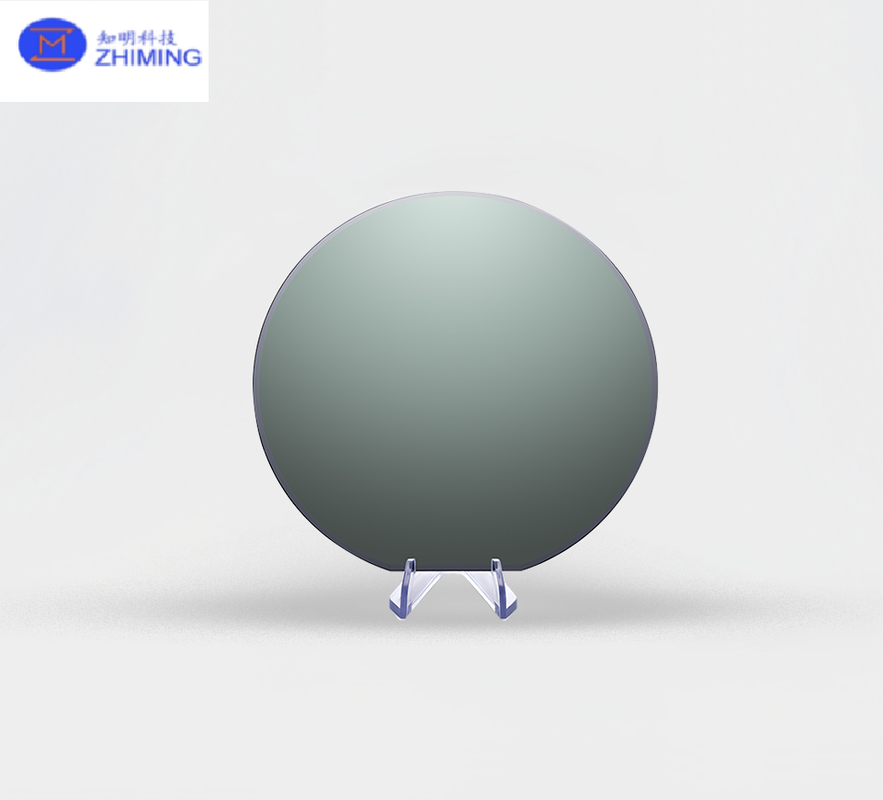
TFLN (Thin-Film Lithium Niobate on Insulator) and TFLT (Thin-Film Lithium Tantalate on Insulator) are high-quality single-crystal thin films fabricated on insulating substrates using advanced smart-cut (ion-slicing) technology. These materials combine the exceptional intrinsic properties of lithium niobate (LiNbO₃) and lithium tantalate (LiTaO₃) with the advantages of thin-film integration, enabling compact, high-performance photonic devices.
By integrating crystalline thin films onto insulating platforms, both TFLN and TFLT provide excellent optical confinement, low propagation loss, and compatibility with modern semiconductor fabrication processes, making them ideal for next-generation integrated photonics.
![]()
Both TFLN and TFLT operate based on their strong electro-optic and nonlinear optical effects:
| Property | TFLN | TFLT |
|---|---|---|
| Electro-optic performance | Excellent | Good |
| Nonlinear efficiency (χ²) | Very strong | Strong |
| Transparency range | Visible–NIR | Extended to mid-IR |
| Laser damage threshold | High | Very high |
| Thermal stability | Good | Excellent |
| Core applications | High-speed & quantum photonics | Infrared & high-power systems |
Q1: What is the main difference between TFLN and TFLT?
TFLN focuses on ultra-fast electro-optic modulation and quantum photonics, while TFLT offers better performance in mid-infrared applications and high-power optical environments.
Q2: Are these materials compatible with semiconductor fabrication?
Yes, both TFLN and TFLT are fully compatible with CMOS processes, enabling large-scale integration.
Q3: Can TFLN be used for quantum applications?
Yes, its strong χ² nonlinearity makes it ideal for generating entangled photon pairs and performing quantum frequency conversion.